Employability
4 min read
What To Do With Your Mobile Phone During a Job Interview
Synopsis
For candidates preparing for interviews: small details shape big impressions. This guide breaks down how something as simple as your phone can signal focus, professionalism, or distraction, and what employers actually notice when it matters most.
Most candidates walk into a job interview knowing they should silence their phone. Fewer think carefully about what that actually means in practice — or how virtual interviews change the calculation. A phone that vibrates on a desk, lights up mid-answer, or gets glanced at during a pause can leave an impression that's hard to shake, even if every other part of the interview goes well.
This article covers the right approach for in-person and virtual interviews, what to do when something goes wrong, and the one scenario where keeping your phone accessible actually makes sense.
Key Insight
Phone etiquette during a job interview isn't just about politeness. Interviewers read how you handle distractions as a signal of your focus and professional habits — even small things register.
Before the Interview Starts
The best time to deal with your phone is before you walk in — not after you've sat down across from an interviewer.
Silence the ringer completely, not just vibration. A phone set to vibrate will still buzz audibly on hard surfaces, and that sound mid-sentence is just as disruptive as a ringtone. Turn off vibration mode entirely.
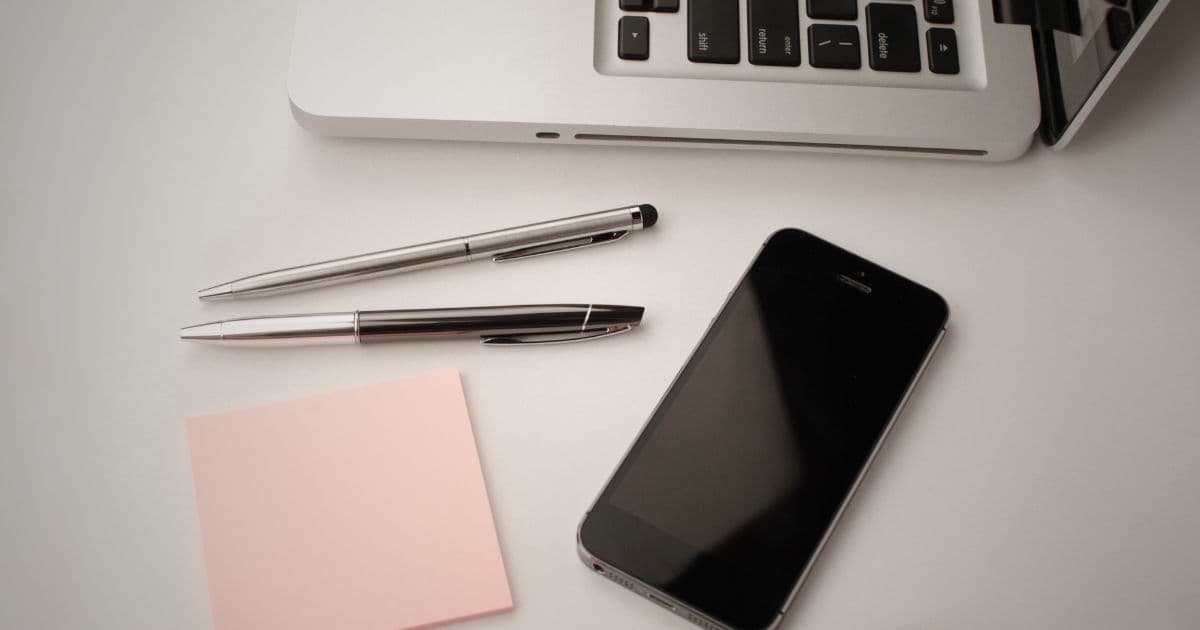
Once it's silenced, put it away. Your bag, your coat pocket, or a jacket pocket are all fine. The one place it should not go is on the table or desk in front of you. Even a face-down phone on a table signals that you haven't fully committed your attention to the conversation.
If you're using public transit or GPS to get to the interview, plan your route in advance so you're not navigating on your phone in the final minutes before you walk in. Arriving composed matters more than arriving exactly on time.
Hint
Set your phone to silent and put it away before you enter the building — not in the waiting room or lobby. Fumbling with your phone while waiting is visible, and some interviews begin the moment you arrive.
In-Person Interviews: The Core Rules
The standard for in-person interviews is straightforward: your phone should not be seen, heard, or thought about until the interview is over.
DONTs
- Place your phone on the desk or table
- Check notifications even briefly during pauses
- Look at your phone if it vibrates in your pocket
- Record the conversation without explicit consent
DOs
- Silence and pocket your phone before entering
- Keep your attention fully on the interviewer
- Apologize briefly and calmly if your phone makes noise
- Turn it fully off if you're worried about interruptions
If your phone does ring or buzz during the interview, don't answer it. Decline the call quickly if you can do it without looking, apologize briefly ("I'm sorry about that"), and continue. Most interviewers will move past it if you handle it calmly and don't dwell on it. What they'll remember is how you recovered, not the interruption itself.
Recording an interview without permission is not something to do under any circumstances. Beyond the legal issues that vary by jurisdiction, the damage to trust if it's discovered is irreparable.
Virtual Interviews: Different Setting, Same Principle
Virtual interviews introduce a different set of phone-related challenges. Because you're in your own environment, the temptation to multitask is higher — and more visible than many candidates realize.
When you glance down to read a message, your eyes shift in a way that's obvious on camera. When you type on a device nearby, the sound can carry through your microphone. Interviewers conducting video interviews are experienced at recognizing when someone's attention has partially left the room.
The core rule still applies: silence your phone and put it out of reach before the interview starts.
Pro Tip
Test your setup at least 15 minutes before the interview begins. If your connection is unstable, your phone can serve as a backup to dial in — but that decision should be made before the call starts, not during it.
There is one legitimate exception. If your internet connection is unreliable or your computer setup is uncertain, keeping your phone nearby as a backup is sensible — but on silent, face-down, and only to be used if your primary setup fails. If you do need to switch mid-interview, apologize briefly, explain what happened, and rejoin as quickly as possible. Most interviewers will accommodate a genuine technical issue if you handle it professionally.
For guidance on setting up the rest of your virtual interview environment, the article on when to use a blurred background in a job interview covers related setup considerations.
What Interviewers Actually Notice
Understanding why phone etiquette matters in interviews helps you take it seriously, rather than treating it as an arbitrary rule.
Interviewers are forming impressions throughout the conversation, not just based on your answers. They're observing how you carry yourself, how you manage the environment, and whether you seem genuinely engaged. A phone placed on the table before the interview starts signals something. So does reaching for it when there's a pause.
None of this is about rigid formality. It's about the practical reality that attention is communicative. When you give someone your full attention, they notice. When part of your attention is elsewhere, they notice that too.
This dynamic is especially relevant when you're interviewing at organizations where focus, discretion, or reliability are central to the role. If you're reading interview red flags from the candidate's side, phone handling is equally visible from the employer's side.
The One Time Your Phone Actually Helps
There is a scenario where your phone earns its place: the post-interview follow-up.
After an in-person interview, a brief thank-you message sent the same day is still considered good practice in most professional contexts. Having the interviewer's contact details saved before you arrive means you're not scrambling afterward. If you plan to send a follow-up, review the guidance on whether to send a thank-you note after an interview and what the modern approach looks like.
Your phone is also useful for keeping track of what was discussed, any next steps mentioned, and names of people you met. Taking a few notes immediately after the interview — while you're still in the parking lot or on transit — helps with the follow-up and with preparing for subsequent rounds.
About the Author

Maria Santos
Career Researcher
Maria Santos
Career Researcher
Maria is a Career Researcher at Yotru, studying hiring trends, resumes, and job pathways to strengthen the platform’s career guidance and insights.
Frequently Asked Questions
Turning it off is the safest option. Airplane mode or full silent mode works too — the goal is no sound, vibration, or screen light during the conversation. Vibrate-only is not sufficient, as the buzz is still audible on most surfaces.
Audience Context
This article is for job seekers preparing for in-person or virtual interviews who want to handle phone etiquette correctly and avoid avoidable distractions that can affect how they're perceived.
Disclaimer
This article is for informational purposes only. Interview norms vary by industry, employer, and region. Readers should use their judgment based on the specific context they're entering.
Further Insights
References
- Goodwill Industries International. (2020, January 6). Cell phone do’s and don’ts during in-person job interviews. Goodwill. https://www.goodwill.org/blog/career-and-financial-advice/cell-phone-dos-and-donts-during-in-person-job-interviews/goodwill
- Link Staffing. (2017, July 11). Cell phone etiquette during job interviews. Link Staffing. https://linkstaffing.com/cell-phone-etiquette-during-job-interviews/linkstaffing
- Riverway Business Services. (2024, May 1). Mastering mobile manners: The do’s and don’ts of cell phone use in job interviews. Riverway Jobs. https://www.riverway.jobs/blog/mastering-mobile-manners-the-dos-and-donts-of-cell-phone-use-in-job-interviewsriverway
- TPG Staffing. (2022, August 9). Job interview tip: Cellphone etiquette. TPG Staffing. https://www.tpgstaffus.com/interviewing-best-practices/job-interview-tip-cellphone-etiquette/tpgstaffus
Maintained by: Employability & Skills Group at Yotru
Review cycle: Updated regularly
Last updated: March 30, 2026
Questions or Need Support?
If you are working on employability programs, hiring strategy, career education, or workforce outcomes and want practical guidance, you are in the right place.
Yotru supports individuals and organizations navigating real hiring systems. That includes resumes and ATS screening, career readiness, program design, evidence collection, and alignment with employer expectations. We work across education, training, public sector, and industry to turn guidance into outcomes that actually hold up in practice.