
Employability
3 min read
How to Write an EMT-B Resume That Gets You Hired (with Example)
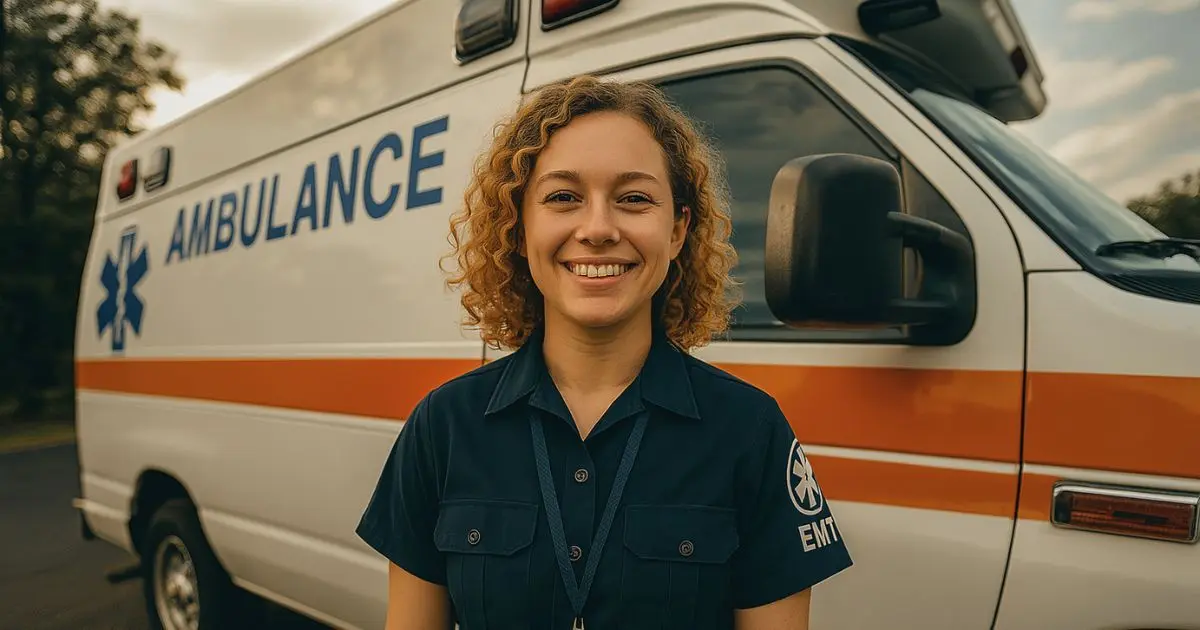
If you're a certified EMT-B and you're applying for jobs, your resume is your most important tool. It’s the first thing a hiring manager sees, so it has to show what you’ve done, how well you’ve done it, and what you bring to the team.
Let’s walk through what an EMT-B is, what hiring managers are looking for, and how Elena Papadopoulos (a great example) built a strong resume. We'll also give you tips to make your resume even better.
What is an EMT-B?
EMT-B stands for Emergency Medical Technician – Basic. This is an entry-level role in emergency medical services. As an EMT-B, you’re trained to give Basic Life Support (BLS) to patients in emergency situations. That includes things like:
- CPR
- Controlling bleeding
- Managing airways
- Transporting patients safely in an ambulance
- Working with paramedics and hospital staff
You usually work for private ambulance services, hospitals, fire departments, or local EMS. EMT-Bs are the first people on the scene when someone calls 911.
What Are Hiring Managers Looking For?
Hiring managers want EMT-Bs who are:
- Calm and quick under pressure
- Good at working with teams like firefighters, nurses, and police
- Able to follow medical procedures properly
- Great at documenting patient care
- Physically fit and reliable
- Certified, trained, and ready to jump in on day one
Bonus points if you’ve trained others, worked in different environments, or have extra certifications like CPR/First Aid or trauma care.
Case Study: Elena Papadopoulos
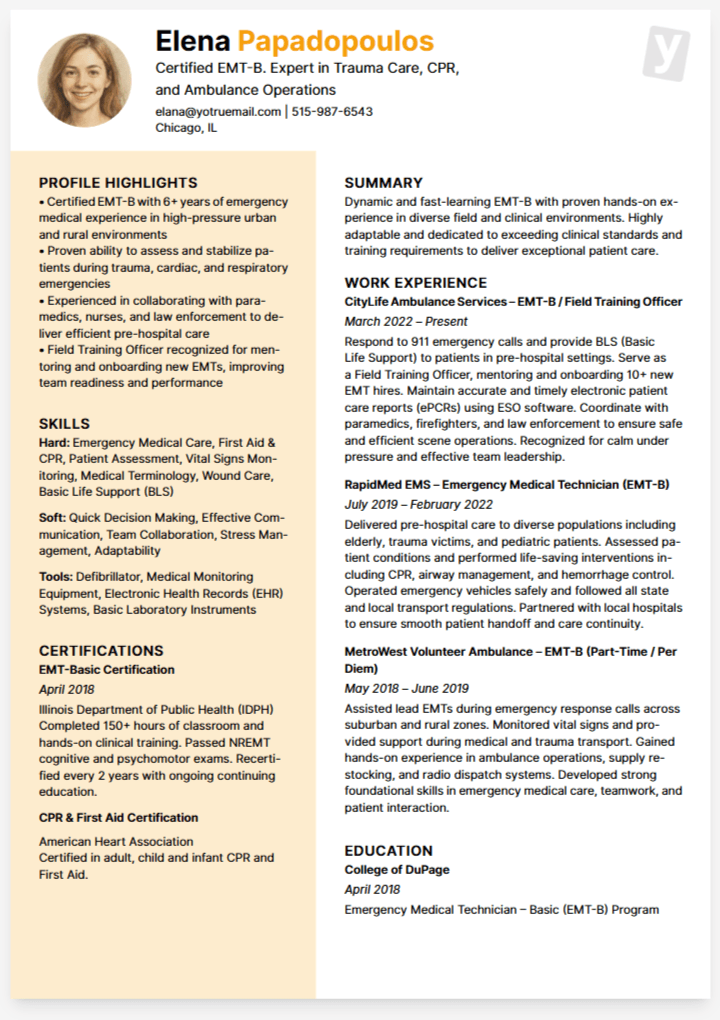
Let’s look at a great example: Elena Papadopoulos from Chicago, IL. She’s a Certified EMT-B with over 6 years of experience, and her resume shows it clearly and confidently.
Background on Elena:
Elena started in 2018 as a part-time EMT and grew into a Field Training Officer. She’s worked in both urban and rural settings, handled trauma and cardiac emergencies, and mentored new EMTs along the way.
What’s Good About Elena’s Resume?
- Clear Timeline: Her work history is well-organized from 2018 to now. You can see her growth from entry-level to leadership.
- Strong Highlights: Her profile section lists top achievements, like training new EMTs, working across different types of emergencies, and using real medical tools and systems.
- Simple, Specific Language: She uses real terms like “ePCRs,” “ESO software,” and “Basic Life Support,” which shows she knows the job.
- Certifications Listed Clearly: Her resume shows exactly when and where she got certified, including CPR and First Aid.
- Balanced Skill Set: She includes both hard and soft skills. Things like “airway management” and “trauma care,” but also “team collaboration” and “effective communication.”
Where She Can Improve
- More Numbers: Elena could add more data. For example, how many calls she responded to per week or how many EMTs she trained.
- More Personal Impact: She might mention a time she went above and beyond (like staying late to cover shifts or helping in a major incident.)
- Tools in Context: She lists great tools (like ePCR and EHR systems) in the skills section, but adding them to the work experience bullets would make it even better.
Use the Right Language in Your EMT-B Resume
Using the right words on your resume can make a big difference. It helps hiring managers quickly understand what you’ve done and what tools you’ve worked with. Start by using clear action verbs that show real responsibility. Words like responded, assessed, stabilized, monitored, operated, documented, collaborated, trained, transported, and provided help show that you were active, involved, and reliable on the job.
You should also include the tools and systems you’ve actually used. For example, mention if you have experience with ESO software, EHR systems, AEDs, defibrillators, vital signs monitors, or ambulance dispatch radios. These details help show you're familiar with real-world equipment and ready to work in the field.
Finally, add in common medical terms and procedures that reflect your day-to-day experience. These could include Basic Life Support (BLS), airway management, CPR, bleeding control, trauma assessment, scene safety, transfer of care, and pre-hospital care. Using this kind of language tells employers that you understand the environment and the expectations of emergency response.
Want a Resume Like Elena’s?
You don’t have to guess what to write or how to format it. With Yotru, you can build a clean, powerful resume that speaks the language of EMS employers.
Just pick your role, add your experience, and we’ll help you craft bullet points, format the layout, and even suggest skills to include.
About the Author
Team Yotru
Employability Systems
Team Yotru
Employability Systems
We build practical career tools for training providers and workforce programs, combining labor market insights with real employment outcomes. Follow us on LinkedIn.
Questions or Need Support?
If you are working on employability programs, hiring strategy, career education, or workforce outcomes and want practical guidance, you are in the right place.
Yotru supports individuals and organizations navigating real hiring systems. That includes resumes and ATS screening, career readiness, program design, evidence collection, and alignment with employer expectations. We work across education, training, public sector, and industry to turn guidance into outcomes that actually hold up in practice.
Continue Reading
More insights from our research team

Best Resume Builder for Students
Building a resume with limited experience is a real challenge. This guide explains what the best resume builder for students should offer, and how to turn coursework, internships, and extracurriculars into a competitive application.
5 min read
Resume Builder That Passes ATS Scans
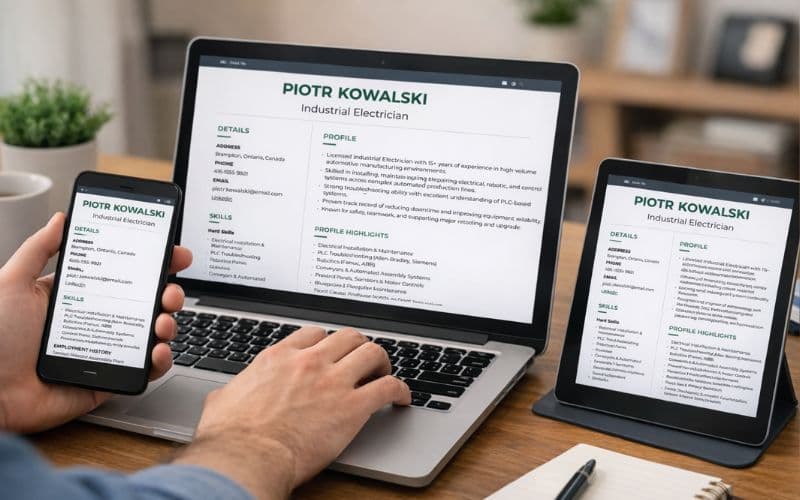
Applicant tracking systems reject a large portion of resumes before a recruiter sees them. This guide explains what a resume builder needs to do to help your resume pass ATS scans.
4 min read

Best Resume Builder for USA
American employers have specific expectations around resume format, length, and content. This guide covers what the best resume builder for USA applications needs to handle — from ATS compliance to regional hiring norms.
5 min read

Best Resume Builder for Laid-Off Employees
Getting laid off puts you under pressure to update your resume quickly. This guide covers what to look for in a resume builder when you've been let go, and how to get back to interviews faster.
4 min read